
Table of Contents
Most swimmers believe faster times come from more laps. In reality, many of the biggest performance gains happen outside the pool. While swim volume remains essential, dryland training develops the strength, power, and stability that swimming alone cannot fully build.
Some of the most significant gains in swimming performance happen away from the water entirely.
Dryland training, a structured physical conditioning done on land, builds the strength, power, core stability, and mobility that pool work alone cannot fully develop.
It fills gaps that swimming leaves behind. Gaps such as underdeveloped pulling strength, weak hip stabilizers, tight shoulders, and limited rotational power from the start block.
This article explains what dryland training is, how it transfers to actual swimming performance, which exercises matter most, and how to structure a program depending on whether you are a beginner, a competitive pool swimmer, or an open-water athlete.
Athletes who participate in multiple water sports can benefit from many of the same physical qualities. If you’re also interested in paddle sports, read our guide on choosing the right board for your needs.
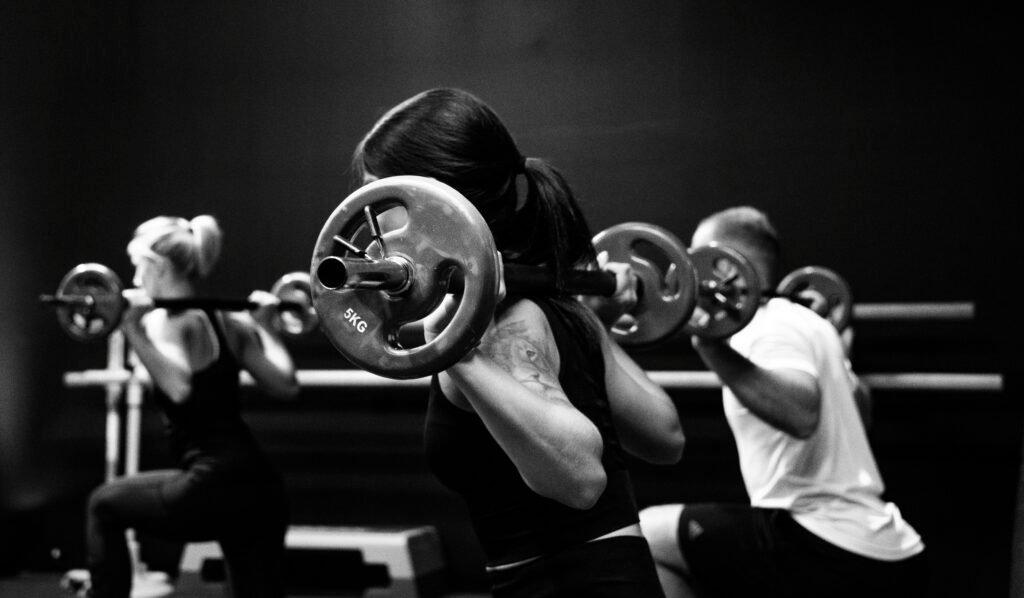
What Is Dryland Training for Swimmers?
Dryland training is land-based strength, mobility, and conditioning designed specifically to improve swimming performance. Unlike general fitness or bodybuilding, every exercise is chosen to support movement, efficiency, and power in the water.
A swimmer who prioritizes muscle size over movement quality, neglects mobility, or ignores swimming mechanics is not performing effective dryland training. The goal is functional strength that transfers directly to performance in the water.
True dryland work is shaped by swimming mechanics. Every exercise should answer the following question:
What does this do for my body position, my stroke, my start, or my ability to sustain effort?
The relationship between dryland and pool training is complementary, not competitive. Pool sessions develop feel for the water, technique, race-specific conditioning, and aerobic capacity. Dryland sessions build the physical foundation that makes technique sustainable under fatigue, and power accessible when it is needed most.
Used correctly, a well-designed dryland program is one of the most effective components of a swim training plan for athletes at any level.
Why Dryland Training Improves Swimming Performance
Builds Strength for More Powerful Strokes
Swimming relies heavily on the lats, upper back, shoulders, and arms to generate propulsion. Although these muscles are used in every session, pool training alone may not provide enough resistance to maximize strength development.
Dryland training allows you to strengthen these muscles through a full range of motion and under greater resistance.
A stronger swimmer can apply more force with each stroke. That means you can move faster without increasing your stroke rate. In other words, you travel farther with every stroke, which is a hallmark of efficient swimming.
Improves Core Stability and Body Position
A strong core is essential for swimming well.
When your core gets tired, your hips begin to drop, and your body position deteriorates. This creates extra drag, forcing you to work harder just to maintain the same speed.
Dryland exercises such as planks, side planks, and anti-rotation exercises help you maintain a strong, streamlined body position even when fatigue sets in.
Less drag, better efficiency, and more energy left at the end of a race.
Develops Explosive Power for Starts and Turns
Starts and turns can make a huge difference in swimming performance, especially in shorter races.
Both require explosive power from the legs and hips. Unfortunately, this type of power is difficult to develop in the water alone.
Exercises such as jump squats, medicine ball slams, and other explosive movements train your body to produce force quickly.
More power on land often translates into:
- Faster starts
- Stronger push-offs
- More speed off every wall
Improves Mobility and Stroke Efficiency
Swimming requires both strength and mobility. Tight shoulders can limit your reach; similarly, stiff ankles can reduce kicking efficiency, and less mobile hips can affect body position and rotation.
Some people think that if they swim more frequently, this will go away, but that rarely fixes these issues.
Dedicated mobility work, such as hip stretches, thoracic rotations, and ankle mobility drills, helps your body move more freely. When you move better, your stroke becomes smoother, more efficient, and less physically demanding.
The Best Dryland Exercises for Swimmers
There is no single “perfect” dryland exercise for swimmers. The best exercises are those that improve strength, stability, mobility, and power while supporting movement patterns used in swimming.
The following exercises should form the foundation of most dryland programs.
Push-Ups
Push-ups are one of the most effective bodyweight exercises swimmers can perform.
They strengthen the chest, shoulders, triceps, and core while teaching swimmers to maintain full-body tension.
Strong pushing muscles help balance the upper body, which is important because swimmers often perform significantly more pulling movements than pushing movements.
Why it matters for swimmers:
- Improves upper-body strength
- Enhances shoulder stability
- Supports balanced muscular development
Coaching tip: Keep your body in a straight line and avoid letting your hips sag.
Pull-Ups or Resistance Band Rows
Swimming propulsion comes primarily from pulling.
Exercises that strengthen the lats, upper back, and biceps can improve a swimmer’s ability to generate force during the pull phase.
Pull-ups are excellent for advanced swimmers, while resistance band rows offer a beginner-friendly alternative.
Why it matters for swimmers:
- Develops pulling strength
- Improves stroke power
- Supports better catch mechanics
Coaching tip: Focus on squeezing your shoulder blades together rather than simply pulling with your arms.
Planks and Side Planks
Swimming demands a stable core.
Planks teach swimmers to maintain body alignment while resisting unwanted movement, closely mimicking the role of the core during swimming.
Both front and side plank variations should be included regularly.
Why it matters for swimmers:
- Improves body position
- Reduces drag
- Enhances force transfer between the upper and lower body
Coaching tip: Quality matters more than duration. A strong 30-second plank is better than a poor 2-minute plank.
Squats
Strong legs contribute to faster starts, more powerful turns, and stronger kicks.
Bodyweight squats are an excellent starting point, while more experienced swimmers can gradually progress to loaded variations.
Why it matters for swimmers:
- Builds lower-body strength
- Improves wall push-offs
- Enhances kicking power
Coaching tip: Keep your chest tall and drive through your heels.
Jump Squats
Once a strong foundation is established, swimmers should include explosive exercises.
Jump squats develop lower-body power, which directly transfers to starts and turns.
Why it matters for swimmers:
- Improves explosive power
- Enhances start performance
- Increases push-off speed
Coaching tip: Focus on maximal effort during each repetition and land softly.
Medicine Ball Slams
Medicine ball slams combine upper-body power, core strength, and explosiveness.
Because swimming requires coordinated movement across the entire body, this exercise has excellent transfer to athletic performance.
Why it matters for swimmers:
- Develops full-body power
- Improves trunk coordination
- Supports explosive race skills
Coaching tip: Generate power from the hips and core rather than using only the arms.
Shoulder Stability Exercises
Healthy shoulders are essential for long-term swimming success.
Simple exercises such as band external rotations, Y-T-W raises, face pulls, and scapular push-ups can help strengthen the muscles that stabilize the shoulder joint.
These exercises may not look impressive, but they are often the difference between consistent training and recurring shoulder pain.
Why it matters for swimmers:
- Reduces injury risk
- Improves shoulder control
- Supports long-term performance
How Dryland Training Should Change Based on Your Goals
Sprint Swimmers
If you race 50m or 100m events, your dryland training should focus on power and explosiveness.
Prioritize:
- Jump training
- Heavy strength work
- Medicine ball exercises
- Plyometric exercises
Keep the sessions short and high quality.
Distance Swimmers
Distance swimmers need to stay strong for longer periods.
Your dryland sessions should focus more on:
- Muscular endurance
- Core stability
- Mobility
- Injury prevention
Higher repetitions and longer core exercises usually work well.
Open-Water Swimmers
Open-water swimming places unique demands on the body.
Without walls to push off and with constantly changing water conditions, you need exceptional endurance and stability.
Prioritize:
- Rotational core work
- Shoulder endurance
- Hip stability
- Mobility exercises
Many open-water athletes cross-train with other water sports that demand similar qualities, including balance, endurance, and core stability. For athletes exploring paddle sports, our beginner guide to paddle board size and type can help you choose equipment that matches your experience level and goals.
How Often Should Swimmers Do Dryland Training?
The ideal training frequency depends on how much swimming you already do.
Recreational swimmers: 1-2 sessions per week
Competitive swimmers: 2-3 sessions per week
Elite swimmers: 3-5 shorter sessions per week
A simple rule to remember: Dryland training should support your swimming, not hurt it.
If you’re constantly tired or your pool performance is suffering, reduce your dryland volume and focus on recovery.
Sample Dryland Workout for Swimmers
Beginner Workout (2x per week, 30–35 minutes)
| Exercise | Sets | Reps / Duration | Rest |
| Push-ups | 3 | 8–12 reps | 60 sec |
| Resistance band rows | 3 | 10–12 reps | 60 sec |
| Plank hold | 3 | 20–40 sec | 45 sec |
| Bodyweight squats | 3 | 12–15 reps | 60 sec |
| Hip flexor stretch | 2 | 30 sec per side | — |
Competitive Swimmer Workout (2–3x per week, 40–45 minutes)
| Exercise | Sets | Reps / Duration | Rest |
| Pull-ups | 4 | 5–8 reps | 90 sec |
| Push-ups (weighted or elevated) | 3 | 10–12 reps | 75 sec |
| Side plank | 3 | 35–50 sec per side | 60 sec |
| Jump squats | 4 | 6 reps | 90 sec |
| Medicine ball slams | 4 | 8 reps | 90 sec |
| Shoulder stability circuit | 2 | 12–15 reps | 60 sec |
Common Mistakes to Avoid
- Training like a bodybuilder.
Building muscle mass is not the goal. Swimmers need usable strength and mobility, not size that adds drag and slows you down in the water.
- Skipping mobility work.
Tight hips and stiff ankles are body position problems. They do not fix themselves. Swimmer mobility exercises and regular stretching need to be part of the routine, not an afterthought.
- Ignoring your shoulders
Swimmer shoulder exercises ike band pull-aparts and external rotations, feel easy but matter a lot. They are the protective work that keeps your shoulders healthy through heavy training loads.
- Going too hard too soon
The first few weeks of dryland training should be about learning the movements, not maxing out. Swimmers who rush the load progression get hurt or burned out quickly.
- Not recovering properly
Dryland adds stress on top of pool training. If you are not sleeping well and eating enough, that stress builds into fatigue instead of fitness. Recovery is not optional.
Frequently Asked Questions
Is dryland training necessary for swimmers?
Not strictly necessary, but consistently beneficial. Swimmers who add structured dryland work alongside pool training develop strength, power, and resilience that pool work alone cannot produce efficiently. At competitive levels, the difference becomes significant.
Can beginners do dryland training?
Yes, and beginners often see faster improvement from dryland than from pool time alone, because the basic physical capacities that support swimming (core stability, pulling strength, shoulder integrity) are underdeveloped in most new swimmers. Start with bodyweight movements and build from there.
Should dryland be done before or after swimming?
Generally, after. Pool sessions require technique and energy. Dryland work done before a pool session may compromise the quality of water training. The exception is light mobility and activation work, which can precede pool sessions beneficially.
What equipment is needed for dryland training?
A beginner program requires nothing beyond a floor and bodyweight. Adding a resistance band and a medicine ball opens most of the essential exercises. Pull-up access becomes important as strength develops.
Can dryland training make you swim faster?
Yes, but the mechanism is indirect. Dryland does not teach you to swim. It builds the physical qualities that make good technique sustainable under fatigue and allows more force to be applied within the same stroke pattern. The fastest improvement comes from combining dryland consistently with quality pool training.
Wrapping Up
The fastest swimmers develop more than technical skill in the pool. They also build strength, power, mobility, and resilience through consistent dryland training.
Strength, power, core stability, shoulder health, and mobility provide the physical foundation that allows good technique to remain efficient under fatigue and transfer more effectively to the water.
A swimmer who trains these qualities systematically, progresses load sensibly, and recovers adequately will consistently outperform athletes of similar talent who rely on pool volume alone.
Start with two dryland sessions each week, focus on movement quality before increasing intensity, and progress consistently over time. Combined with quality swim training, dryland work remains one of the most effective long-term investments in swimming performance.